
Google has officially released Gemini 4 Argon, a flagship reasoning model built for difficult, multi-step work. It became broadly available on October 13, 2026, with a 1-million-token context window and introductory API pricing that makes it worth a closer look.
But if you make AI videos, images, or social content, the bigger question is not just whether Argon is smarter. It is what you can actually make with it. Here is what the launch changes, and how to turn a better brief into something visual.
What Is Gemini 4 Argon?
Gemini 4 Argon is Google DeepMind's frontier reasoning model for coding, research, complex documents, and multi-step agents. It accepts text, images, video, audio, and PDFs and returns text through its API. The model supports a unified 1,048,576-token context window and selectable low, medium, and high thinking levels.
For creators, the distinction is important: Gemini 4 Argon can study a reference video, identify its camera language, and write a production brief. It is not itself a native image or video generator in the API. A separate creative tool is still needed to render the final assets.
Gemini 4 Argon Benchmarks vs GPT-6 and Claude
Google DeepMind's published benchmark table puts Argon ahead in several categories, notably the Vals Index and DeepSWE v1.1. It does not win every test: GPT-6 Astra scores higher on FrontierSWE v2. These are vendor-published results, so real-world outcomes may differ.
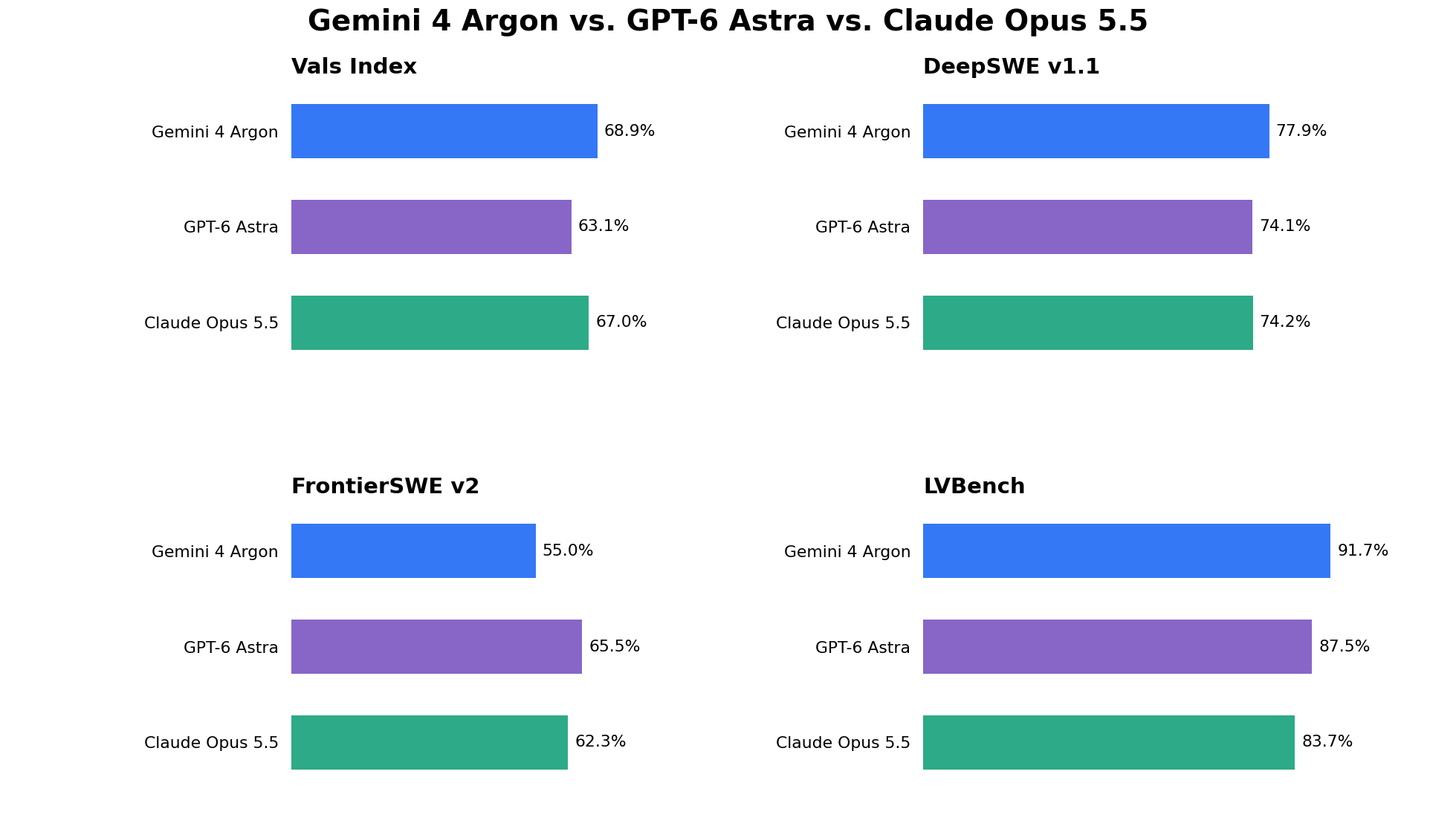
For a creator, the useful takeaway is not "one model wins." Strong reasoning can help you compare references, develop consistent storyboards, and spot gaps in a shot list before you spend time generating scenes.
Gemini 4 Argon API Pricing
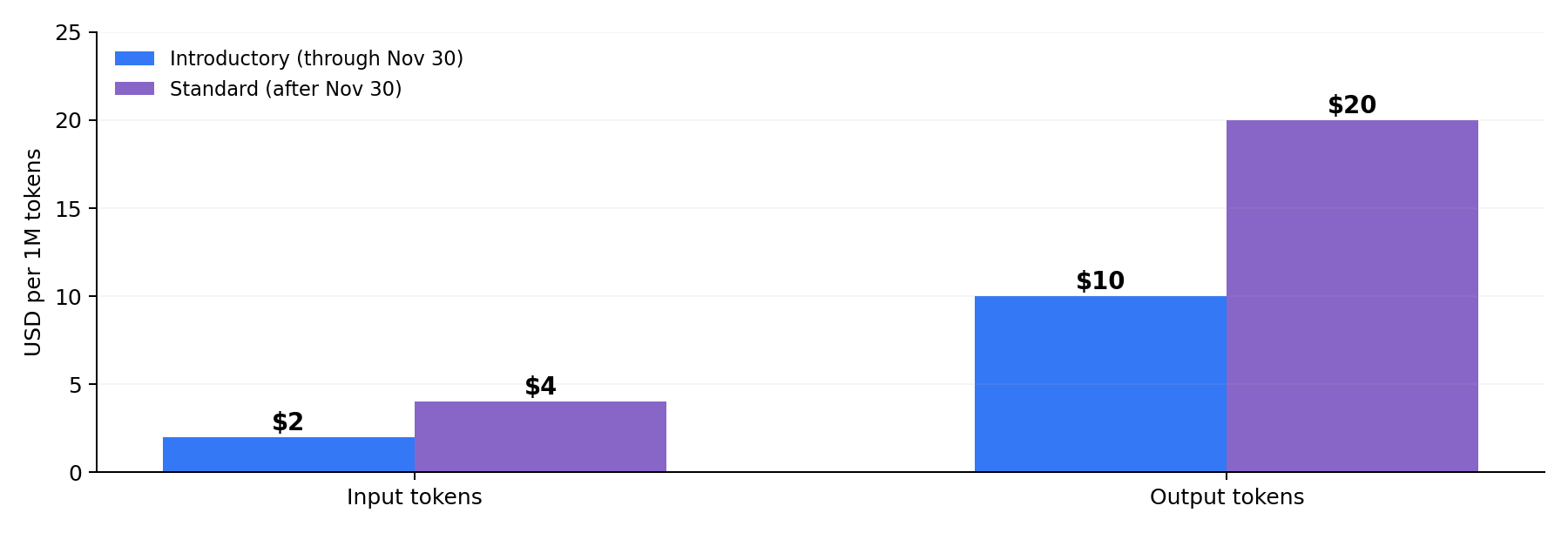
Google lists an introductory rate of $2 per million input tokens and $10 per million output tokens through November 30, 2026. The announced standard rates afterward are $4 and $20. Subscription access in consumer products is separate from API billing.
How to Use Gemini 4 Argon
Google provides access to eligible users through the Gemini app, developers through Google AI Studio and the Gemini API (model ID: gemini-4-argon), and eligible Google AI Ultra users through Antigravity. Product and country eligibility may vary.
A better way to test it is with a real deliverable: upload a 15-second video reference, ask for a camera-by-camera breakdown, and request three variations designed for a different genre. Then take your favorite concept into a video-generation workflow.
3 Practical Creative Prompts to Try
- 1. Reverse-engineer a reference video. “Analyze this clip shot by shot. Identify framing, movement, lighting, transitions, and pacing. Return a concise shot list and the visual details that must stay consistent.”
- 2. Adapt a trend without copying it. “Turn this short-form trend into three original 12-20 second ideas for a playful cat character. Give each a clear first-three-second hook, scene changes, and a production-ready prompt.”
- 3. Build a cinematic sequence. “From this story premise, draft a four-shot sequence with lens feeling, camera movement, subject action, mood, and continuity notes. Keep each shot independently generatable.”
Turn the Brief Into an AI Video on Wery.ai
A strong prompt is the start, not the finished post. Once Argon has helped you plan the scenes, move into Wery.ai to explore AI image and video creation, experiment with ready-to-use templates, and iterate on the visual result. Start with a format that suits your idea, then adjust the prompt, look, and motion.
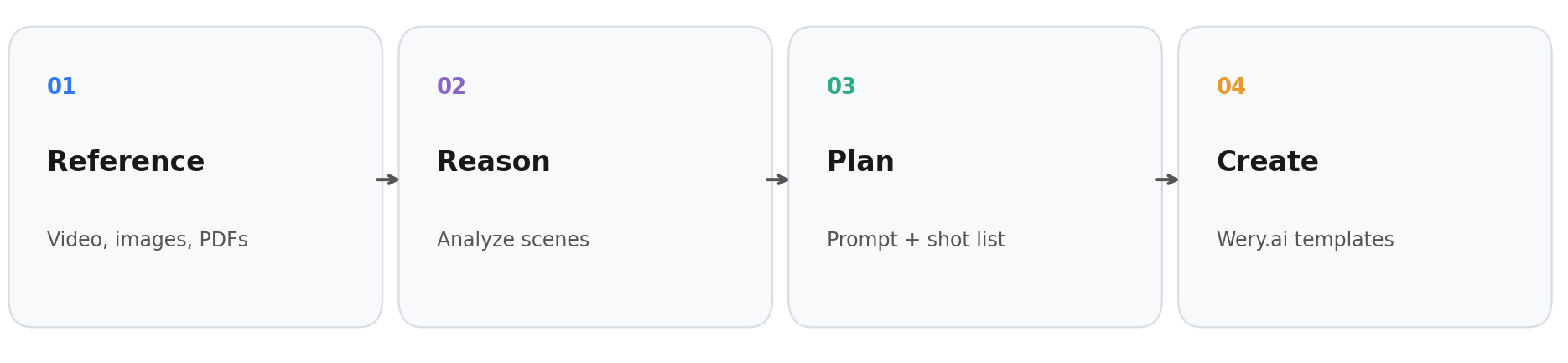
Try this today: take one reference clip, generate a three-shot plan, and produce one visual variation for each shot. A small, specific test tells you far more than asking a model to "make it cinematic."
FAQ
When was Gemini 4 Argon released? Google expanded global availability on October 13, 2026.
Is Gemini 4 Argon free? Availability is focused on eligible paid subscribers and billed developer usage; check the product you plan to use.
Is Gemini 4 Argon better than GPT-6? It leads in some Google-published benchmarks but not all. Your use case matters more than a single score.
Can it generate images or video? Its Gemini API specification lists multimodal inputs and text output, not native image or video generation.
The Bottom Line
Gemini 4 Argon offers stronger options for the planning side of creation: analyzing visual references, keeping longer projects in context, and turning loose ideas into coherent directions. When you are ready to make those ideas visible, use a dedicated creative workflow rather than expecting reasoning alone to deliver a finished video.